



Context
Every new role starts with a client meeting
Recruitment agencies fill roles for their clients, and each one starts with an intake meeting: a company hiring a Data Center Manager, say, explains the role, the team and what good looks like. The recruiter then has to write the role up, find people who fit, check they’re interested and qualified, and put the best in front of the client.
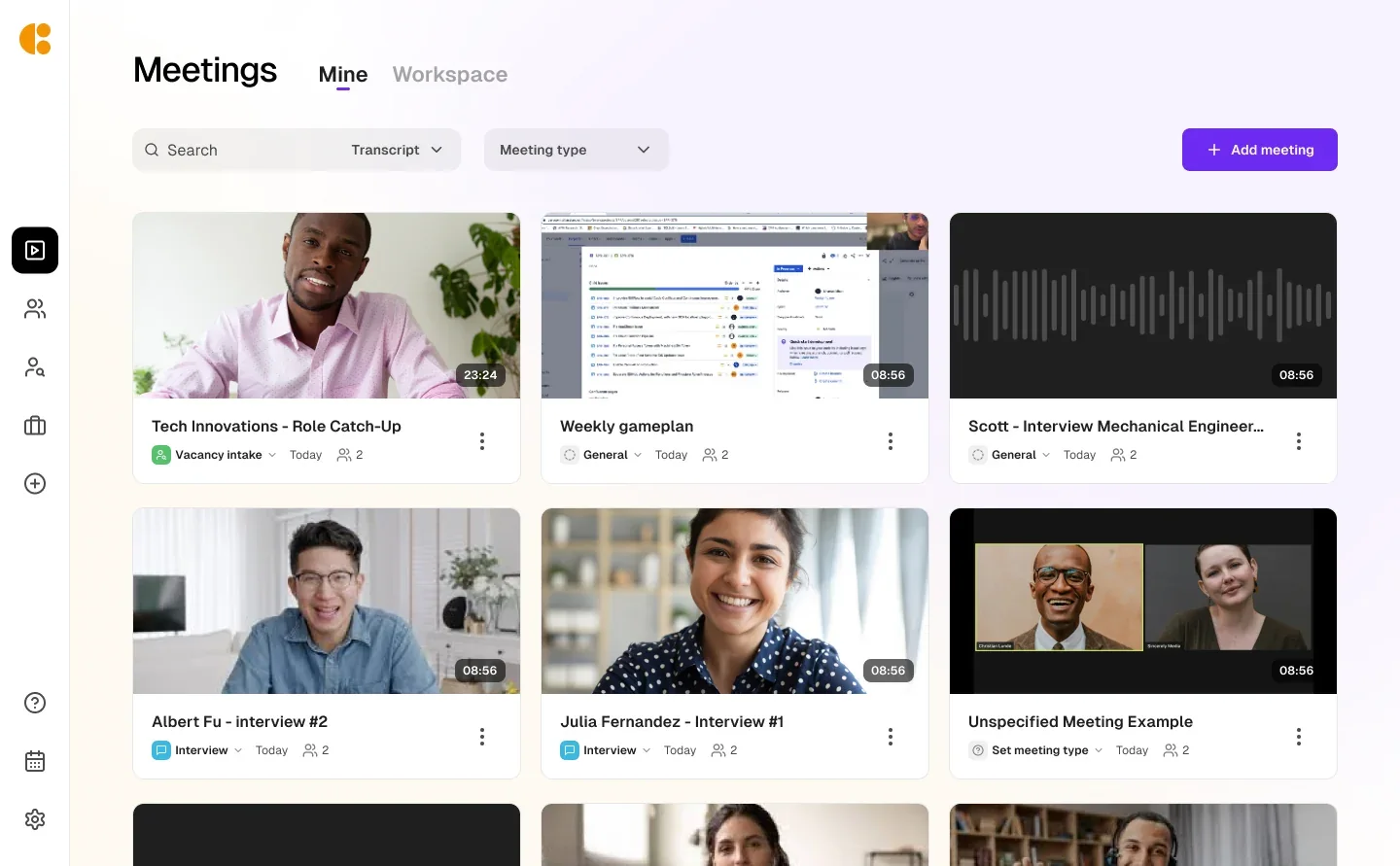
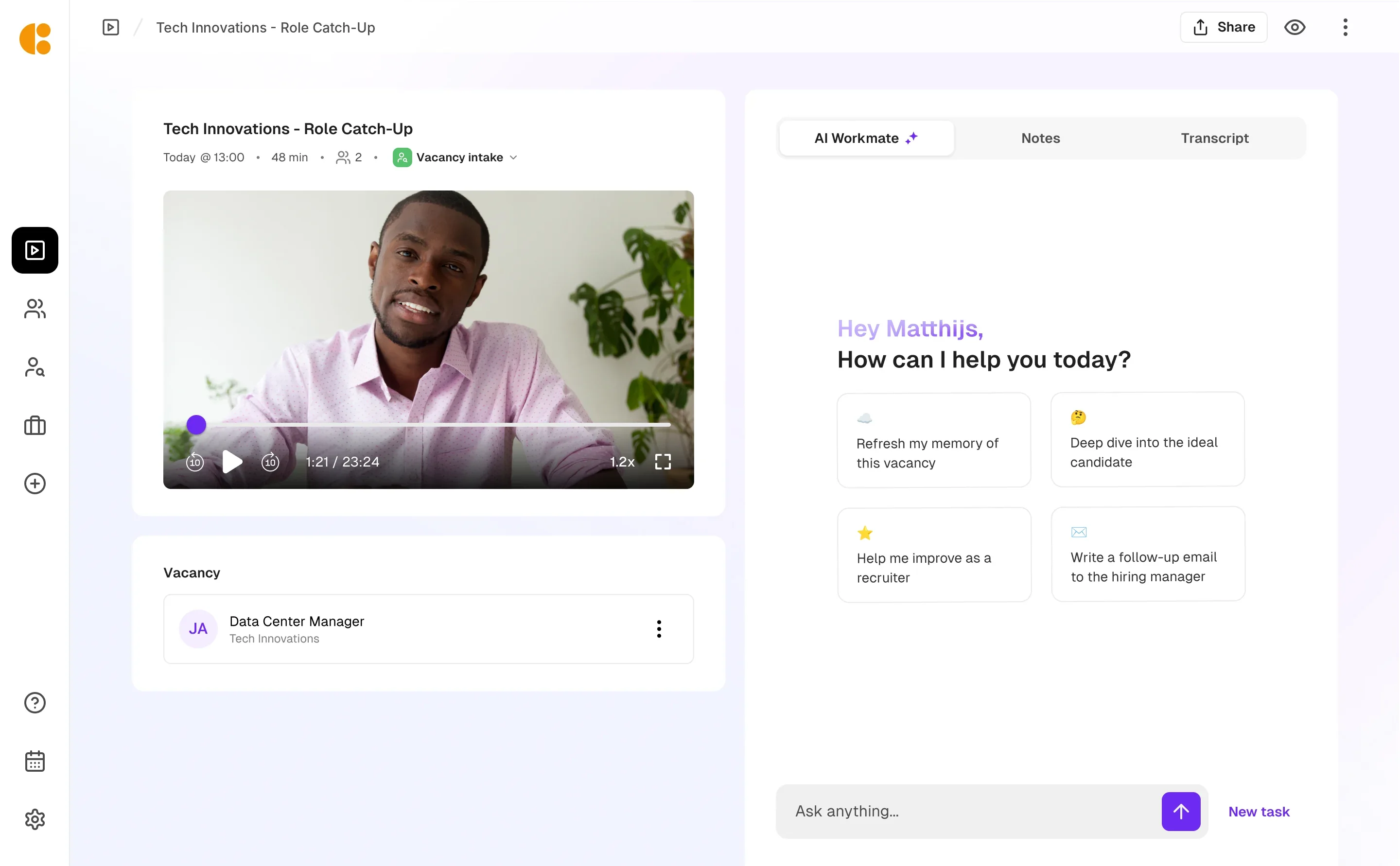
Carv already recorded these meetings, and its AI could turn them into a job description or an intake report to send back to the client. But an intake meeting stayed just a meeting: you could ask Carv’s AI assistant questions about what was said, and everything after that happened in other tools.
Opportunity
The best candidate might already be in your database
Every recruitment consultancy has a talent pool, sometimes collected over years. Sourcing brand-new candidates for every role is slow and expensive, and people you’ve spoken to before can be a great match for the role in front of you.
But there was no easy way to search that pool and find them, so recruiters often started from scratch for every new role.
How might we take a recruiter from an intake meeting to qualified candidates from their own talent pool, without leaving Carv?
Approach
From intake meetings to vacancies
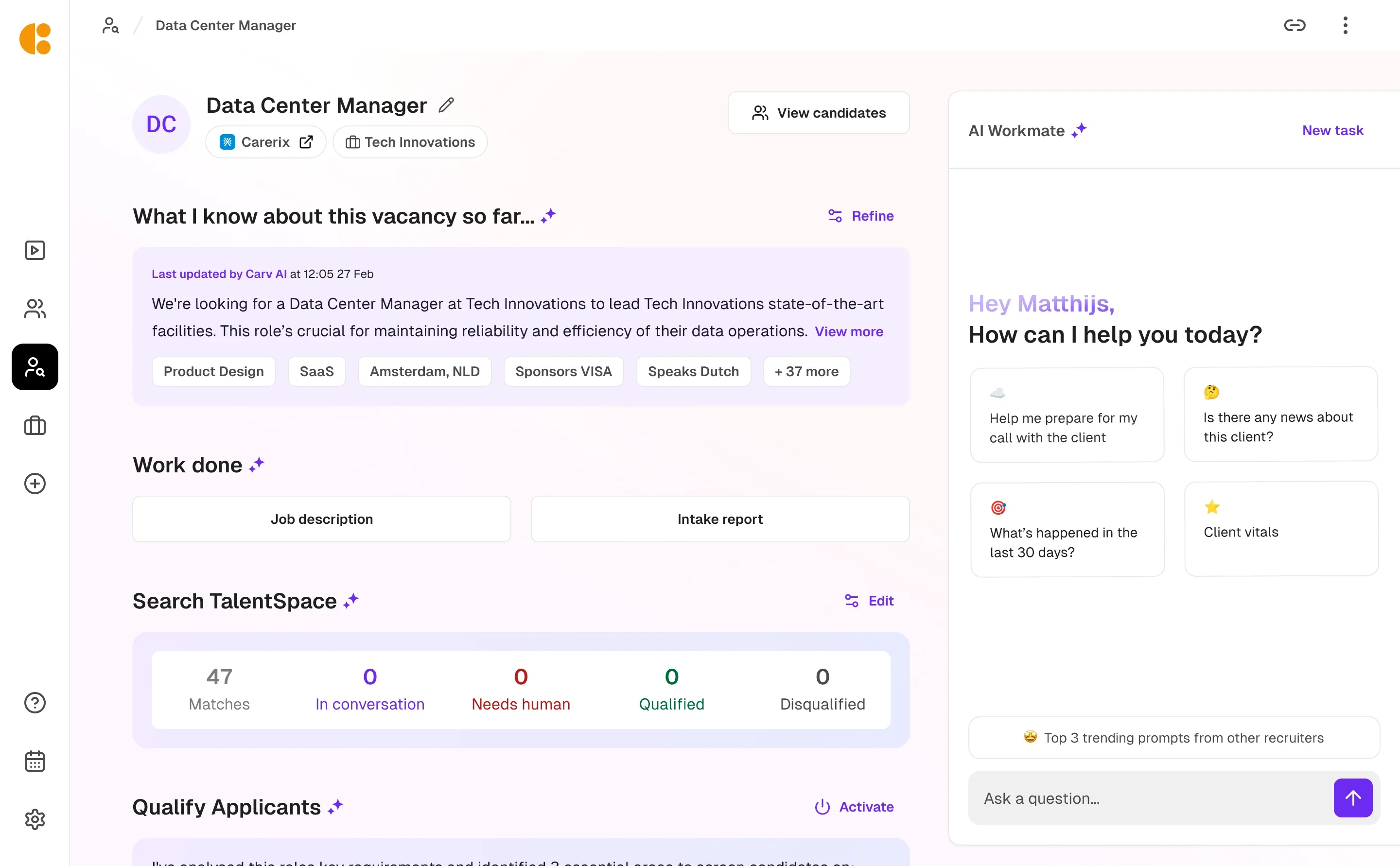
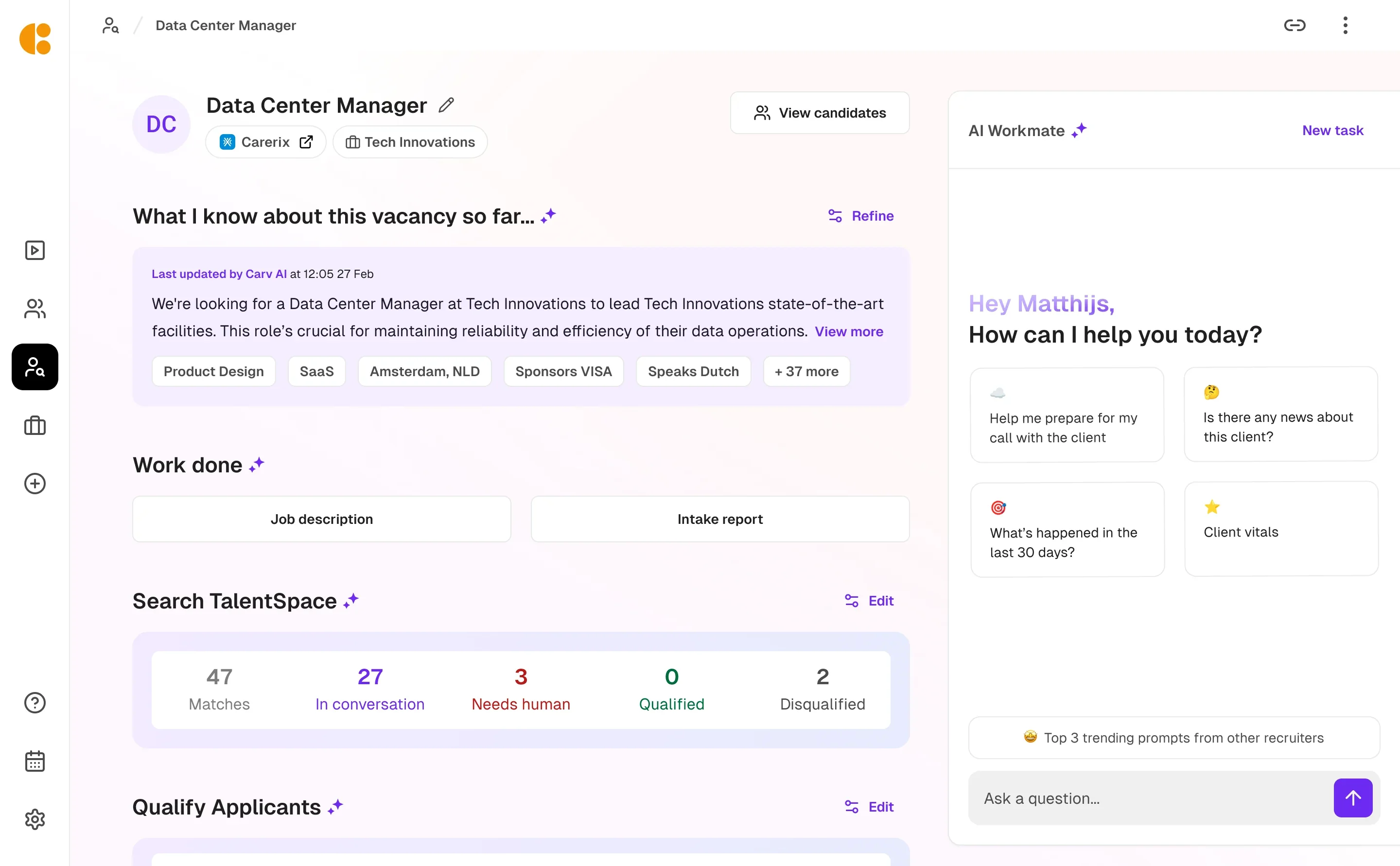
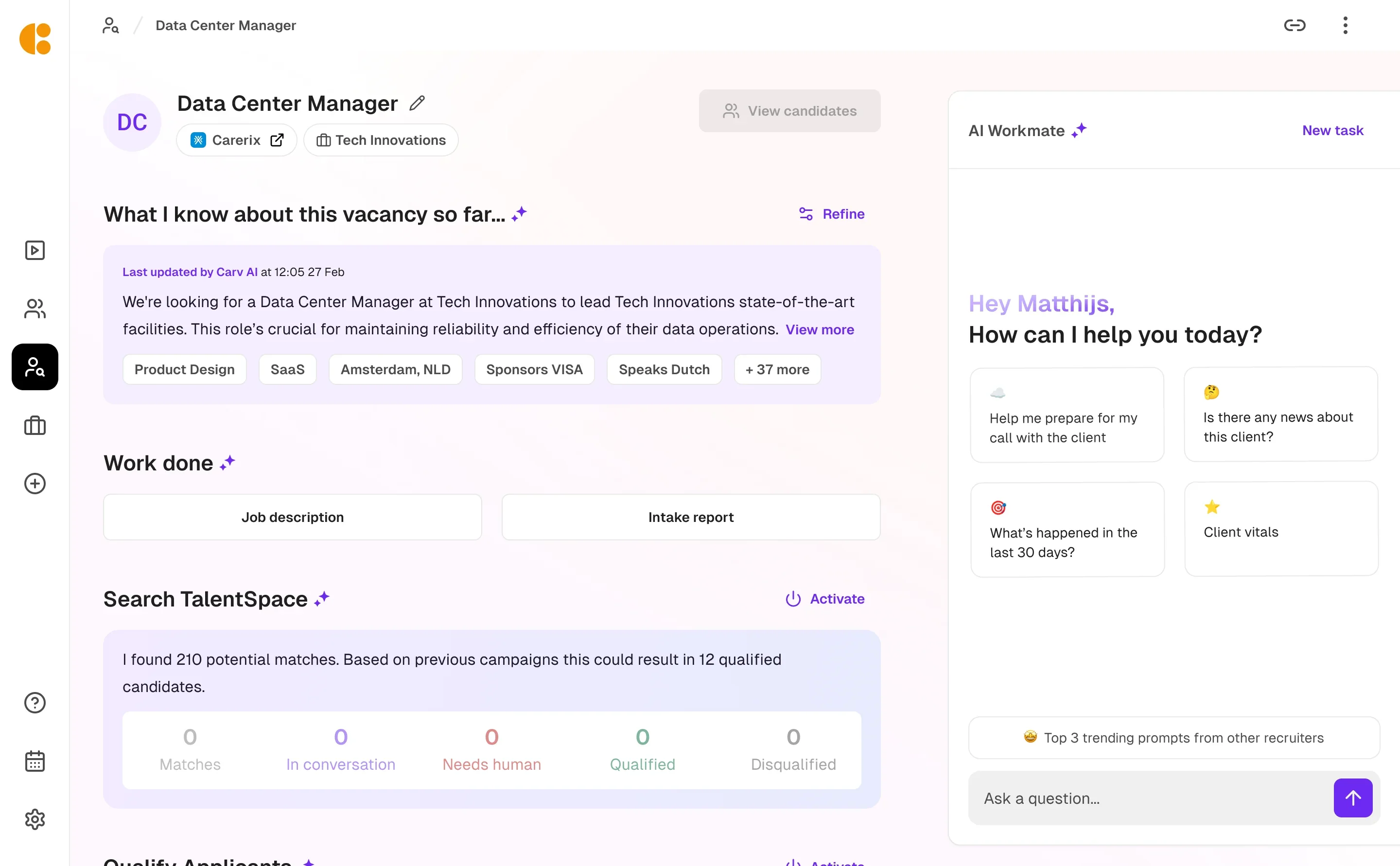
We turned intake meetings into vacancies: one page per role that gathers its meetings, documents and everything Carv has learned about it. From there, a recruiter can take the role all the way to a shortlist:
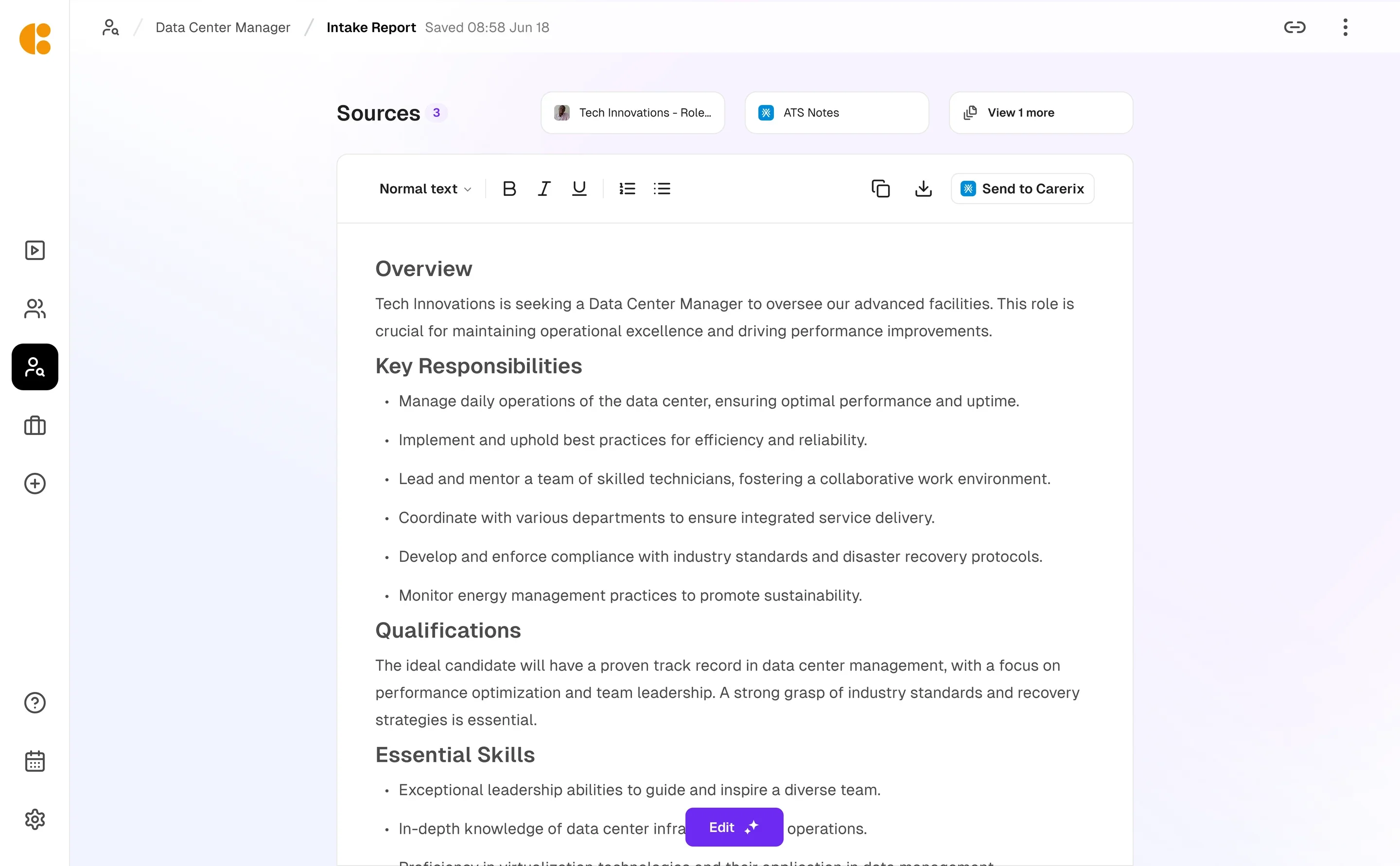
- Write the documents. The job description and intake report are generated from the intake meeting, ready to edit and send to the client.
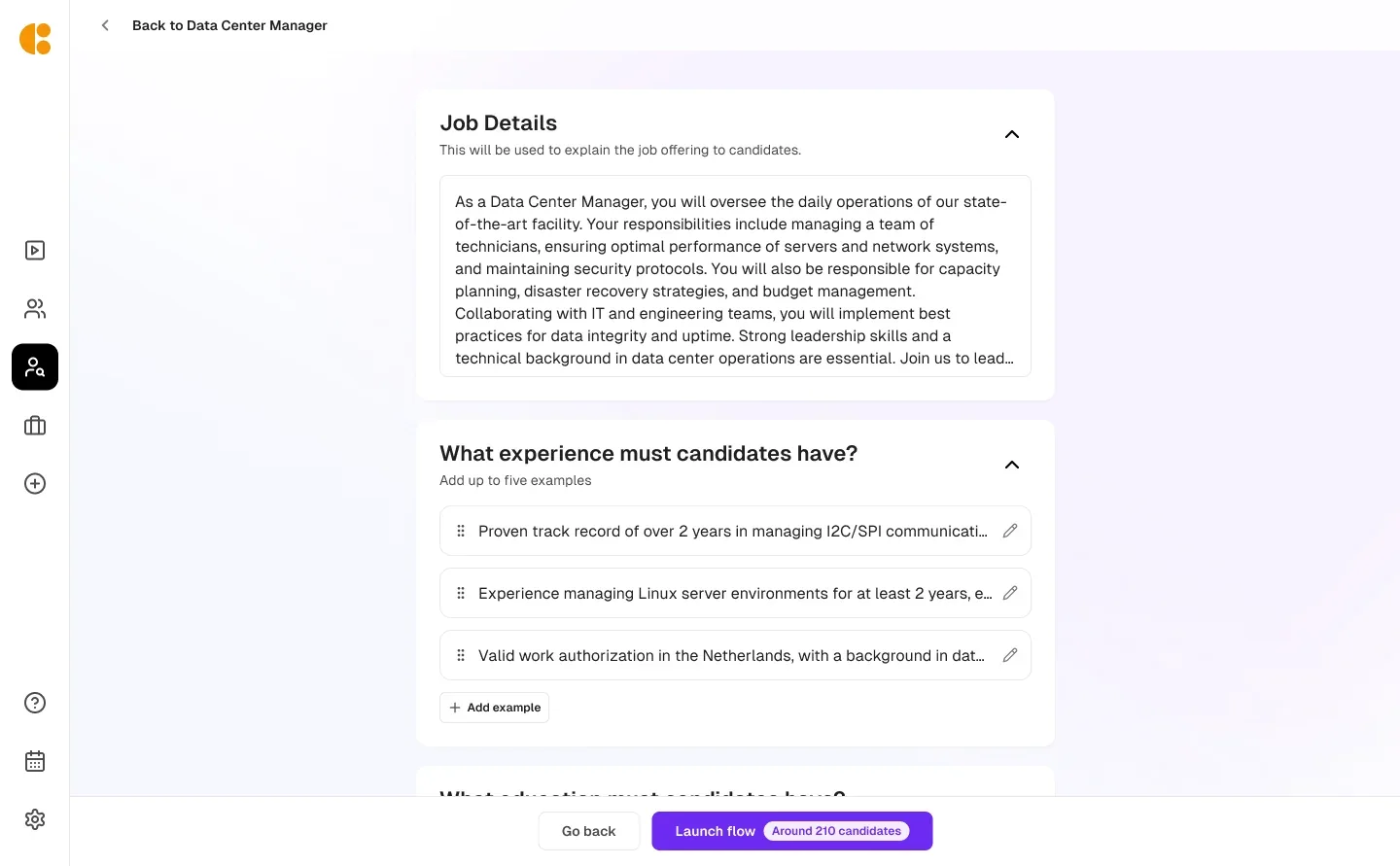
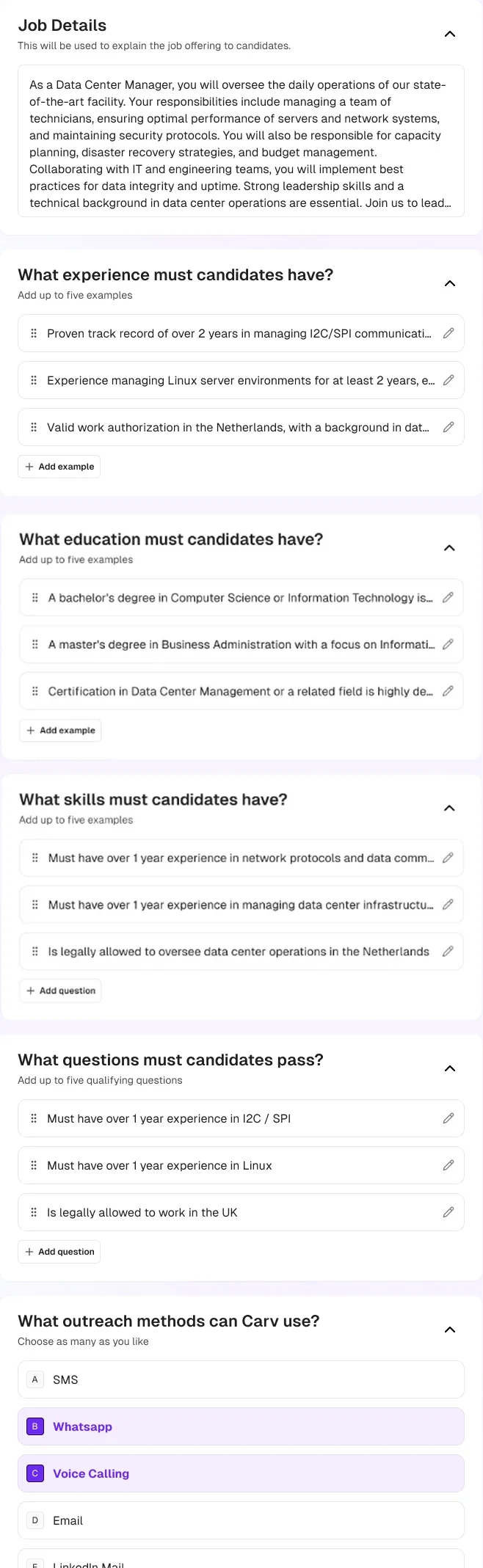
- Search the talent pool. Search TalentSpace, Carv’s search of the agency’s own candidates, is pre-filled from what was said in the meeting (job details, experience, education, skills), so the recruiter only checks it before launching.
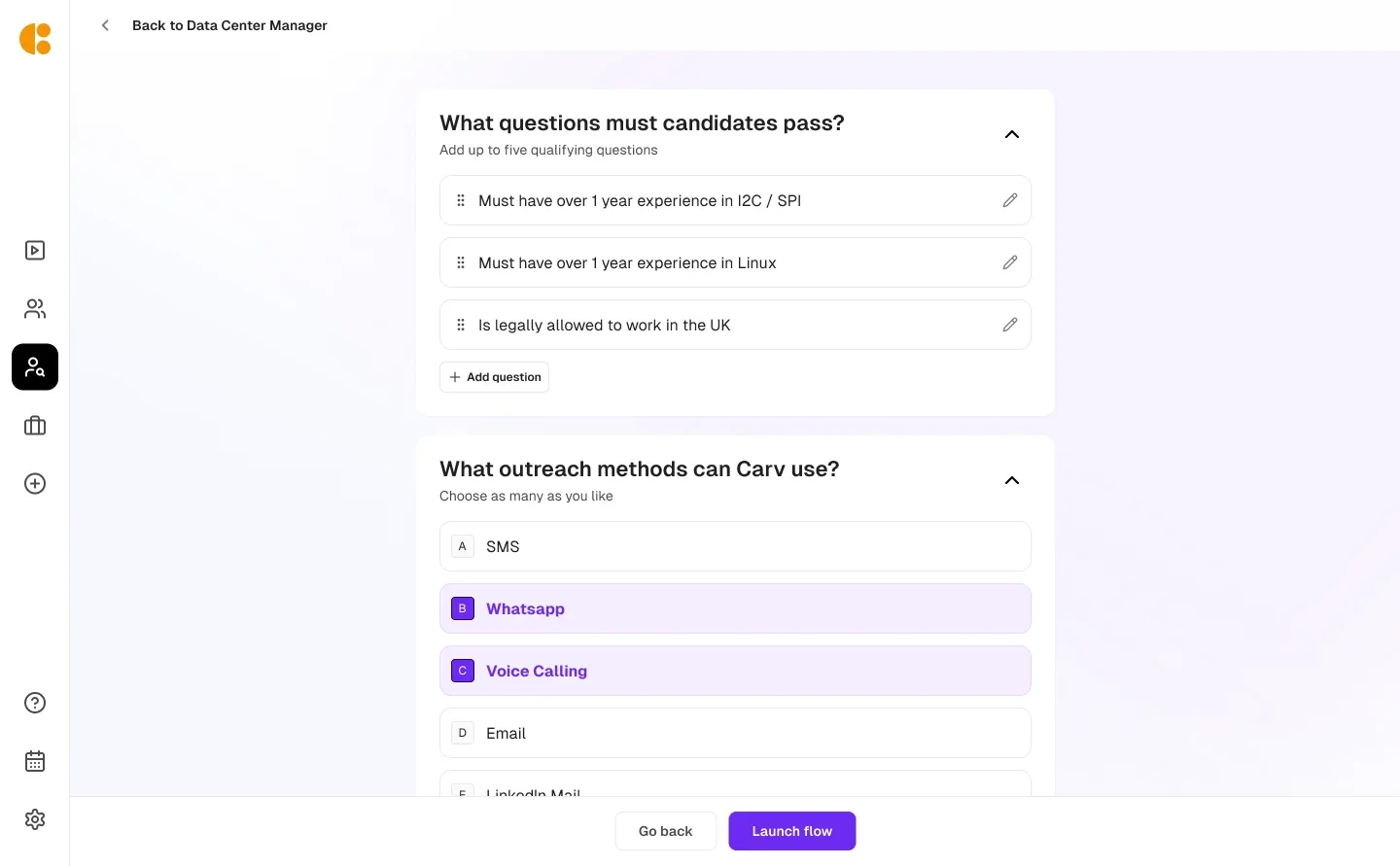
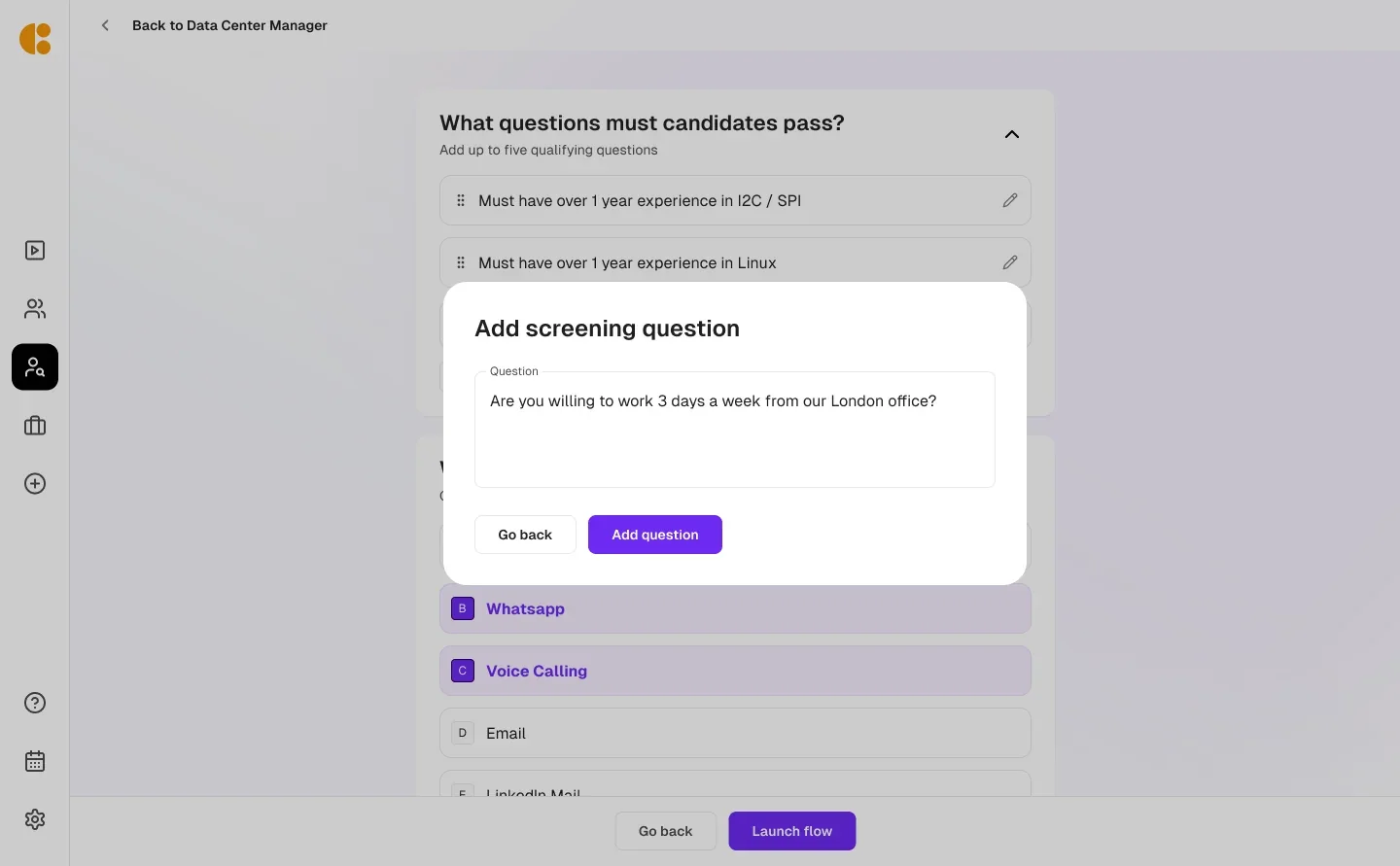
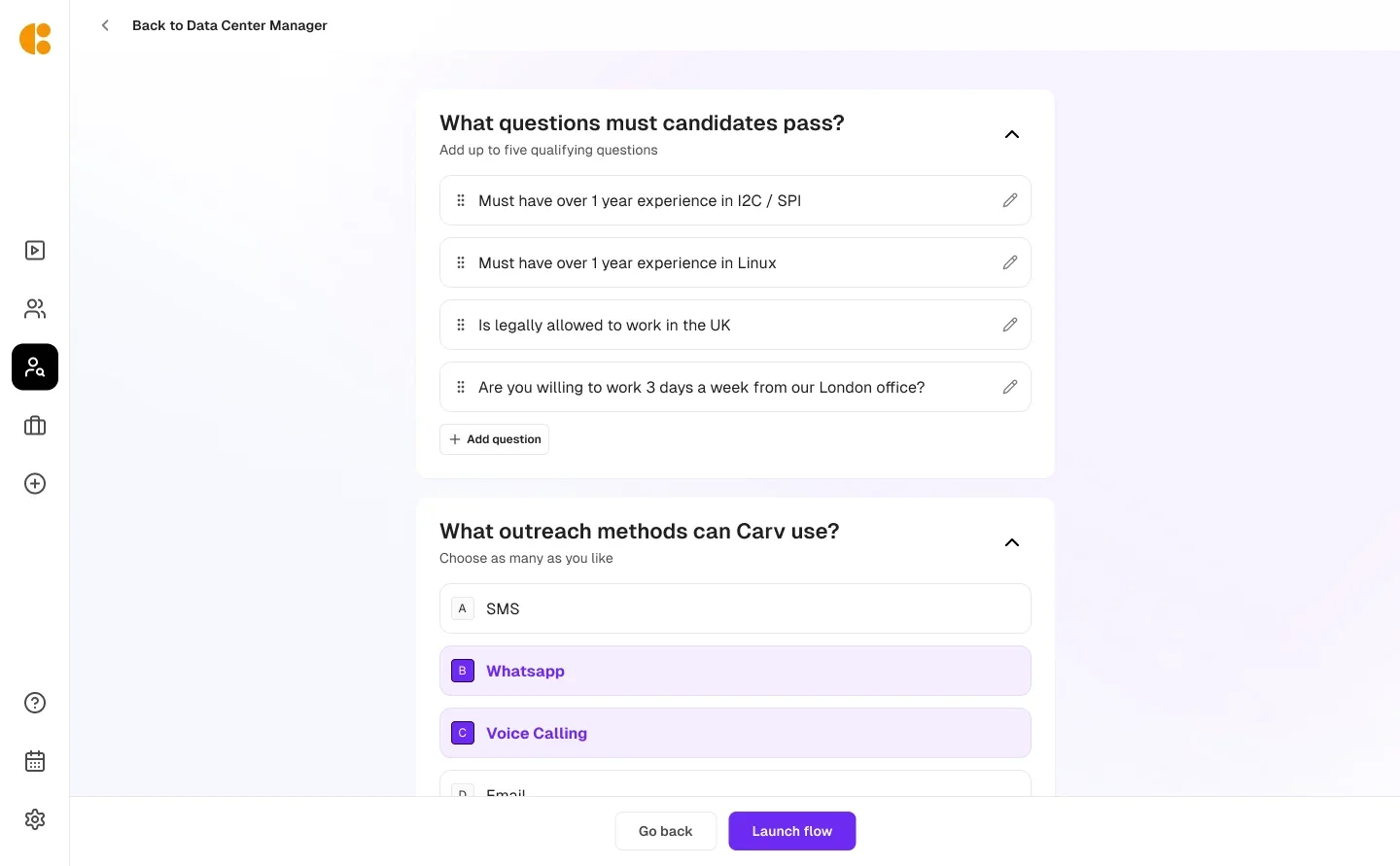
- Let AI screen and qualify. The recruiter sets the questions candidates must pass, adds screening questions and picks how Carv may reach out (WhatsApp, voice calls, email and more). Carv contacts matching candidates and qualifies them.
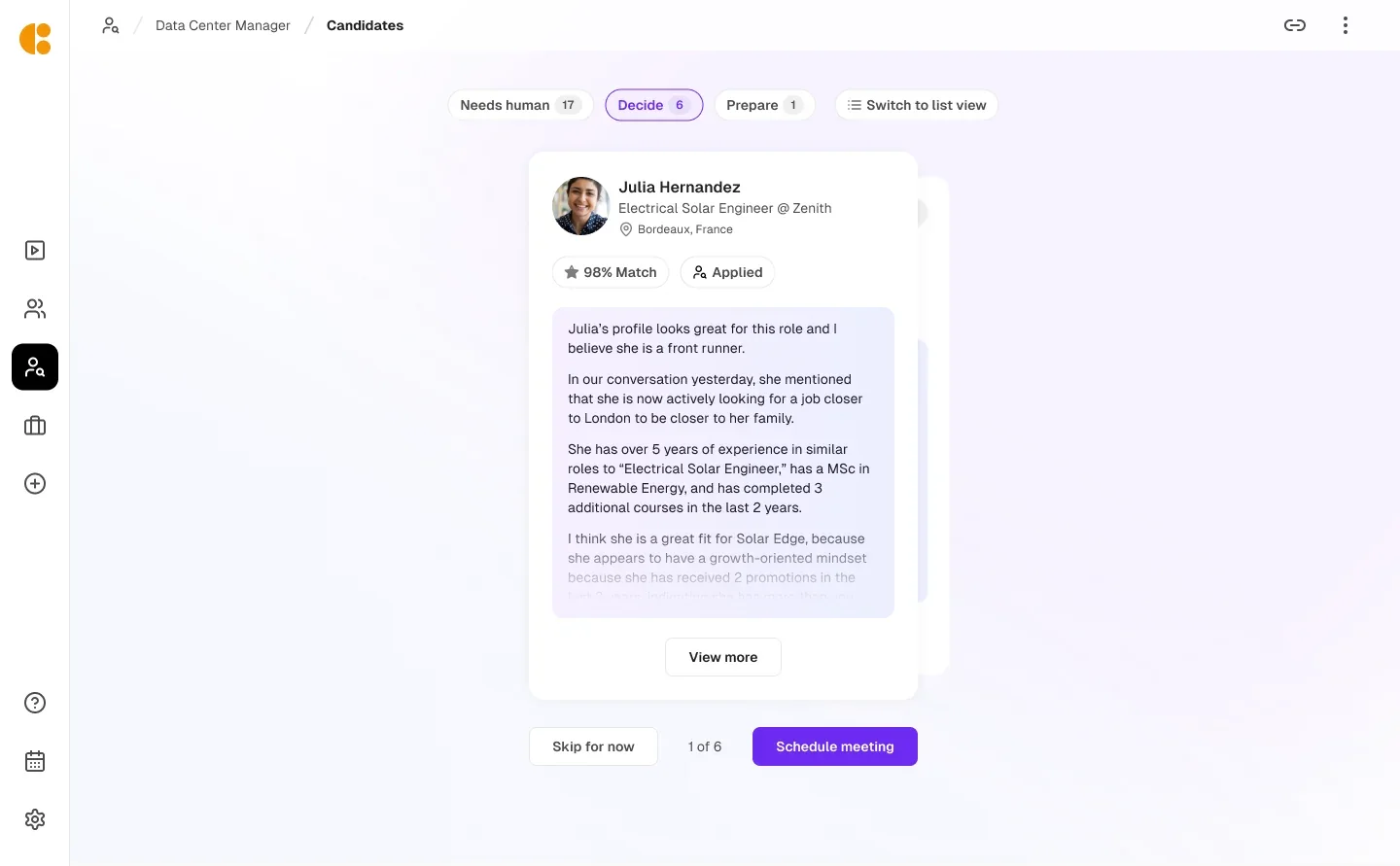
- Keep a human in the loop. High-match candidates arrive as cards with an AI summary, sorted into who needs a human, who to decide on and who to prepare for, and the recruiter decides whether to schedule a meeting.
Outcome
Intake to shortlist, in one place
- A recruiter can do the whole job in Carv: hold the intake meeting, confirm the vacancy and its documents, search the talent pool, screen and qualify candidates, and schedule the best ones.
- Agencies get more from the candidates they already have, before paying to source new ones.
- AI handles the first outreach and screening; recruiters spend their time on high-match candidates.
- The vacancy became the foundation for searching beyond the talent pool, bringing external sourcing into the same flow.